The Centers for Disease Control and Prevention estimates that approximately 76 million people become ill from pathogens in food each year in the United States.[1]
What causes this high occurrence of foodborne illness? Most commonly, it's caused by bacteria such as E. coli and Salmonella, that is present in your kitchen. In fact, the kitchen is home to more harmful bacteria and germs than the bathroom![2]
Meat and poultry products are the usual culprits of foodborne bacteria, although it is not always because they were raw or undercooked. Sometimes, they have become contaminated during processing or packaging.
The USDA Food Safety and Inspection Service recalls meat products frequently because of dioxin, Listeria, and other agents. Meat products aren't the only bacteria-laden foods that have been recalled this year. The U.S. Food and Drug Administration also recalled spinach, peppers, avocados and tomatoes this year that were contaminated with E. coli and Salmonella.
The National Digestive Diseases Information Clearinghouse offers a list of the bacterial types, symptoms, and sources of many foodborne illnesses as well as preventative measures.[3] Bacteria can live on cutting boards, sponges, countertops, sinks, the grooves between tiles, and many other places in your kitchen. They don't always come from contaminated, recalled foods. Bacteria grow in moist conditions in your kitchen and can be transferred from one surface to another by hands or dish towels.
Common Sources of Kitchen Germs
- Meat and poultry juices
- Undercooked or raw meat and poultry
- Any raw foods (fruits, veggies, eggs, meats)
- Unpasteurized dairy products
- Eggs that are undercooked or raw
- Undercooked or raw shellfish
- Damaged canned goods
- Salted or smoked fish
The Importance of Disinfecting Your Kitchen
It's important to keep your family healthy, but in a fast-paced and constantly changing lifestyle, it can be hard to constantly monitor what every hand in your house is getting into. That's why it is important to properly disinfect kitchen surfaces and supplies on a regular basis, in order to keep bacterial colonies from growing in unwanted places. This doesn't mean that you need to buy a lot of fancy toxic cleaning supplies or convert all of your soaps to the antibacterial variety. In fact, some studies show that using antibacterial products do not reduce the occurrence of infectious disease in households any more than using regular cleaning products does.[4]
You should stick to natural or non-toxic methods to disinfect your kitchen counters and tile floors. Harsh chemicals have many drawbacks, but natural alternatives do just as thorough of a job at cleaning and at a much lower cost, both to your bank account and the environment. Plus, they usually smell better! Be sure to wash all foods.
Natural Options for Killing Germs
There are plenty of natural ways to kill germs in your kitchen and home. The following are some of the best.
1. Vinegar
The smell of the vinegar dissolves after it is dried. For a nice post-cleaning scent, add a little bit of organic peppermint extract or other essential oil extracts to your vinegar and water solution. You might find some organic clove oil adds a nice spicy scent too.
- White distilled vinegar can be used to effectively evict most bacteria and germs from their living quarters. That's because vinegar is a weak form of acetic acid, the pH of which is too strong for most germs to survive.
- Undiluted vinegar can be used to clean countertops, greasy ovens, dishwashers with soap residue, coffee pots, and cloudy glassware.
- Diluted vinegar is nontoxic and can be used all around the home as an all-purpose cleaner and deodorizer — just fill a spray bottle with 1 part vinegar to 1 part water (50/50) and you're ready to go.
2. Hydrogen Peroxide
Hydrogen peroxide, the same stuff that you buy to disinfect cuts and scrapes, can also be used to disinfect your kitchen. Just fill a spray bottle and wipe down your kitchen surfaces with 3 percent hydrogen peroxide (the strength you can purchase at the drugstore) to kill germs. Another bonus: peroxide adds a streak-free shine to reflective surfaces.
3. Tea Tree Oil, Neem Oil, and Orange Oil
Tea tree oil, neem, and orange oil can all be used as safe, effective kitchen cleaners. These all-natural products will keep your kitchen clean without leaving behind a chemical residue.
How to Make Your Own Natural Disinfectant
Here are some quick and easy recipes to keep on hand when you're ready to make the switch to a cleaner, healthier kitchen:
- As an antibacterial and antifungal agent for food prep surfaces, mix 2 cups distilled water, 25 drops tea tree oil, 25 drops lavender in a 16-ounce spray bottle and use.
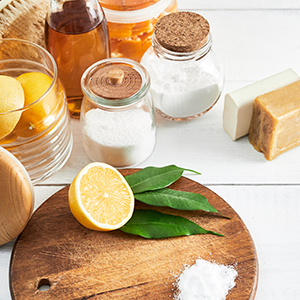
- To clean and reduce bacterial buildup in the garbage disposal, place used lemon rinds and turn on 2 to 3 times a week.
- Mix lemon juice with baking soda in a 1:2 ratio for an abrasive, deodorizing paste. If you have whole lemons, just cut one in half, rub the cut end in baking soda and use that as your scrubber.
- For glass cleaner, use either undiluted white vinegar or undiluted 3 percent hydrogen peroxide to wipe down the glass. These will disinfect and leave a streak-free shine. The vinegar also does an excellent job of cutting through grease left from cooking.
- Wash all foods before cutting or cooking in a bowl of water with a capful of hydrogen peroxide to kill germs.
- Add 10 drops of tea tree oil to two cups of hot water and a half cup of white vinegar for a great all-purpose disinfectant.
References (4)
- Centers for Disease Control and Prevention. CDC and Foodborne Outbreaks.
- Univeristy of Rochester Medical Center "In the Kitchen: Prevent the Spread of Infection."
- National Didgestive Diseases Information Clearinghouse. Foodborne Illnesses. National Institute of Diabetes and Digestive and Kidney Diseases. 2012 July. NIH Publication No. 12–4730.
- Larson EL, Lin SX, Gomez-Pichardo C, Della-Latta P. Effect of antibacterial home cleaning and handwashing products on infectious disease symptoms: a randomized, double-blind trial. Ann Intern Med. 2004 Mar 2;140(5):321-9.
†Results may vary. Information and statements made are for education purposes and are not intended to replace the advice of your doctor. If you have a severe medical condition or health concern, see your physician.