


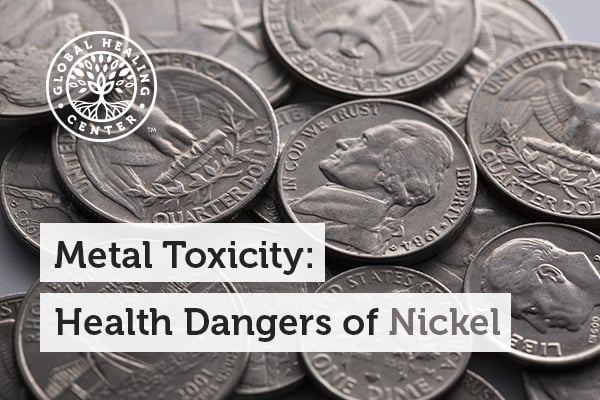
Nickel is a metal, commonly used to make coins, magnets, jewelry, stainless steel, electronics, and components of industrial machines. Most people are familiar with the attractive mirror-finish that can be achieved by nickel plating. However, despite the beautiful appearance, nickel exposure, especially in industrial and occupational settings, can present significant health hazards.
Effects of Nickel Exposure
Nickel is one of many carcinogenic metals known to be an environmental and occupational pollutant. The New York University School of Medicine warns that chronic exposure has been connected with increased risk of lung cancer, cardiovascular disease, neurological deficits, developmental deficits in childhood, and high blood pressure. [1]
Nickel exposure introduces free radicals which lead to oxidative damage and may also affect the kidneys and liver. [2] In 2012, Egypt's Ministry of Agriculture administered liver function tests to 25 nickel-plating workers. Results showed they overwhelmingly suffered from compromised liver function. [3]
Researchers at Dominican University of California have linked nickel exposure to breast cancer. How? Well, nickel is believed to bind to estrogen receptors and mimic the actions of estrogen. It is well established that lifetime estrogen exposure is a breast cancer risk factor, and, unfortunately, even this "imposter estrogen" contributes to the risk. [4]
Additionally, nickel has been identified as a toxin that severely damages reproductive health and can lead to infertility, miscarriage, birth defects, and nervous system defects. [5] [6]
Why is Nickel Toxic?
Having toxic metals in your body is like having sugar in your gas tank. It's simply not built to process the material and severe mechanical concerns are going to result. No, they don't just "pass right through." According to the National Cancer Institute at the National Institute of Environmental Health Sciences, metals are not inert, they have biological activity. [7]
Nickel toxicity, specifically, was evaluated by researchers at Michigan State University who found it presented a multi-tiered toxic attack. First, nickel causes essential metal imbalances. It severely disrupts enzyme action and regulation. Finally, it causes and contributes to a high amount of oxidative stress. [8]
Occupational Exposure to Nickel
Nickel is widely used in industry, primarily refining, electroplating, and welding. The National Institute for Occupational Safety and Health warns that workers who inhale nickel laced dust and fumes are at an increased risk for lung cancer and fibrosis. [9]
The increasingly common use of nanoparticles has introduced a new generation of health concerns... with good reason. South Africa's National Institute for Occupational Health recently attributed the death of a 38-year-old man to respiratory distress caused by inhaling nickel nanoparticles during an industrial manufacturing process. [10]
Casual Exposure to Nickel
Did you know orthodontics (braces) may contain nickel? Because they are in contact with saliva, acidic fluids, and temperature changes, the United Kingdom's Bristol Dental Hospital warns that corrosion and subsequent ingestion may be an item for concern. [11]
Additionally, people like shiny things and nickel is shiny, which is why a lot of jewelry contains nickel. Perhaps you have seen some jewelry selections that are "nickel free?" This supply exists to serve the 10-20% of the population who are sensitive to nickel and experience a rash when it touches their skin.
Mitigating Nickel Exposure
Tests can be performed to determine the presence of nickel in the body but the resulting adverse health effects cannot be predicted. Minimizing your exposure risks is a solid course of action. Most people can simply avoid jewelry that contains nickel but but if you work in an affected industry, you may want to seriously consider your potential health hazards.
There is one positive item to mention. A study out of Saudi Arabia confirmed the toxic effects of nickel nanoparticles on the airway and lungs. More interesting, however, is that researchers reported a reduction in toxicity and oxidative stress when curcumin was introduced. [12]
References (12)
- Chervona Y, Arita A, Costa M. Carcinogenic metals and the epigenome: understanding the effect of nickel, arsenic, and chromium. Metallomics. 2012 Jul;4(7):619-27. doi: 10.1039/c2mt20033c. Epub 2012 Apr 3. Review.
- Das KK, Das SN, Dhundasi SA. Nickel, its adverse health effects & oxidative stress. Indian J Med Res. 2008 Oct;128(4):412-25. Review.
- El-Shafei HM. Assessment of liver function among nickel-plating workers in Egypt. East Mediterr Health J. 2011 Jun;17(6):490-4.
- Aquino NB, Sevigny MB, Sabangan J, Louie MC. The role of cadmium and nickel in estrogen receptor signaling and breast cancer: metalloestrogens or not? J Environ Sci Health C Environ Carcinog Ecotoxicol Rev. 2012;30(3):189-224. doi: 10.1080/10590501.2012.705159. Review.
- Forgacs Z, Massányi P, Lukac N, Somosy Z. Reproductive toxicology of nickel - review. J Environ Sci Health A Tox Hazard Subst Environ Eng. 2012;47(9):1249-60. doi: 10.1080/10934529.2012.672114. Review.
- Apostoli P, Catalani S. Metal ions affecting reproduction and development. Met Ions Life Sci. 2011;8:263-303.
- Tokar EJ, Benbrahim-Tallaa L, Waalkes MP. Metal ions in human cancer development. Met Ions Life Sci. 2011;8:375-401.
- Macomber L, Hausinger RP. Mechanisms of nickel toxicity in microorganisms. Metallomics. 2011 Nov;3(11):1153-62. doi: 10.1039/c1mt00063b. Epub 2011 Jul 28.
- Zhao J, Shi X, Castranova V, Ding M. Occupational toxicology of nickel and nickel compounds. J Environ Pathol Toxicol Oncol. 2009;28(3):177-208. Review.
- Phillips JI, Green FY, Davies JC, Murray J. Pulmonary and systemic toxicity following exposure to nickel nanoparticles. Am J Ind Med. 2010 Aug;53(8):763-7. doi: 10.1002/ajim.20855.
- House K, Sernetz F, Dymock D, Sandy JR, Ireland AJ. Corrosion of orthodontic appliances--should we care? Am J Orthod Dentofacial Orthop. 2008 Apr;133(4):584-92. doi: 10.1016/j.ajodo.2007.03.021. Review.
- Siddiqui MA, Ahamed M, Ahmad J, Majeed Khan MA, Musarrat J, Al-Khedhairy AA, Alrokayan SA. Nickel oxide nanoparticles induce cytotoxicity, oxidative stress and apoptosis in cultured human cells that is abrogated by the dietary antioxidant curcumin. Food Chem Toxicol. 2012 Mar;50(3-4):641-7. doi: 10.1016/j.fct.2012.01.017. Epub 2012 Jan 18.
†Results may vary. Information and statements made are for education purposes and are not intended to replace the advice of your doctor. If you have a severe medical condition or health concern, see your physician.


