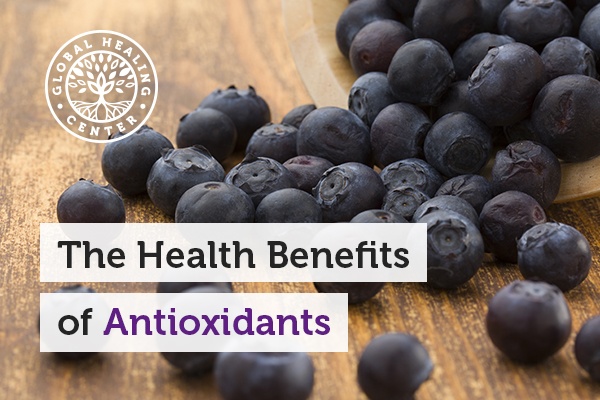
You may have heard a lot about antioxidants in conjunction with good health and avoiding diseases. Antioxidants have gotten great press, and rightfully so. But how do they work once inside our bodies, and what are some sources of antioxidants?
Have you ever seen the bottom-feeder fish in a fish-tank, sucking up all the gunk and grime? Think of antioxidants as molecular-sized, "free radical scavengers" in the fish-tank of your body.
Once an antioxidant finds its way into the body (mostly through the foods we eat), it slows down or even prevents the oxidation of other molecules. When molecules in the body oxidize, they can create free radicals, or cellular byproducts. It is very normal to have these free-radicals in the body, but in excess, they can wreak havoc on our cellular structures.
What Are Free Radicals?
Free radicals create a destructive process in our cells, causing the molecules within the cells to become unstable. They may even be a big player in the formation of cancerous cells by a "chain-reaction" effect, causing other cells to become damaged. Because of the inherent instability of free-radicals, they try to attack other healthy cells to get stable themselves. This causes the once-healthy cells to react in the same way, attacking others in a never-ending attempt for cellular stability.
In layman's terms, free-radicals are bullies that start pushing everybody around and encourage nice cells to become bullies as well. Just like most conflicts, the results are "free radical waste products" made up of our broken, injured and deformed cells. If our cells are weak, it is natural that our organs, tissues, and skin of the body will likewise become weakened.
As you can imagine, oxidative damage plays a huge role in many of our modern-day diseases [1], such as muscle and tissue degeneration, heart disease, diabetes, cancer, as well as many other health concerns. You are exposed to free radicals as a normal byproduct of regular bodily processes, like breaking down the food we eat, taking toxic medicines, as well as through exposure to pollutants. In addition, over-exposure to the sun (sunburn) and smoking can also increase your body's need to oxidize and create free-radicals. Antioxidants stop this cellular chain reaction of oxidation by neutralizing the free radicals.
Many plants and animals keep large amounts of antioxidants on hand, due to their role in counteracting cell damage, as well as their ability to repair damaged cells. Studies have shown that antioxidants can play a role in reducing the cell-damage of free radicals [2].
Moreover, the National Cancer Institute has stated that preliminary research in lab animals has shown that "antioxidants help prevent the free radical damage that is associated with cancer [3]." Many experts feel that increased antioxidants in the body can also help slow the process of aging, and may even increase longevity.
How can you get more of these antioxidants into your body?
The secret to consuming more antioxidants is simple: Eat more organic fresh fruits and vegetables.
The simplest and most effective way to expose yourself to more antioxidants is through your diet. By incorporating at least five servings of fruit and vegetables a day into your diet, you may be helping your body reduce its chances of heart disease, neurological diseases, cancer, and lowered immunity.
Studies show that it is more effective to get antioxidants through diet, as opposed to taking supplements. So, enjoy eating a variety of these fruits and veggies daily!
Foods High In Antioxidants
The following is my short-list for antioxidant-rich foods. Try to incorporate as many as possible into your daily diet. Remember, organic, raw, fresh, and local is always best:
- Corn
- Lime
- Kale
- Lemon
- Dates
- Chiles
- Cloves
- Garlic
- Grapes
- Prunes
- Mangos
- Squash
- Millet
- Almonds
- Berries
- Carrots
- Peppers
- Oregano
- Spinach
- Apricots
- Broccoli
- Cinnamon
- Tomatoes
- Olive Oil
- Artichoke
- Green Tea
- Pineapple
- Red Beets
- Goji Berries
- Acai Berry
- Coconut Oil
- Pinto Beans
- Broad Beans
- Wheat Germ
- Pomegranates
- Hempseed Oil
- Barley & Rye
- Black Currant
- Blood Oranges
- Sweet Potatoes
- Raw Nuts & Seeds
- Whole Grain Brown Rice
Supplements High in Antioxidants
I use the following supplement daily and would highly recommend them to anybody looking to supplement their diet with antioxidants.
- intraMAX® 2.0 - 100% Organic Liquid Multi-Vitamin
Below is an abstract of a scientific study about the benefits of antioxidants. I hope you found it as interesting as I did.
Measurement of antioxidant activity using biologically relevant assays is important in the screening of fruits for potential health benefits. The cellular antioxidant activity (CAA) assay quantifies antioxidant activity in cell culture and was developed to meet the need for a more biologically representative method than the popular chemistry antioxidant capacity measures.
The objective of the study was to determine the cellular antioxidant activity, total phenolic contents, and oxygen radical absorbance capacity (ORAC) values of 25 fruits commonly consumed in the United States. Pomegranate and berries (wild blueberry, blackberry, raspberry, and blueberry) had the highest CAA values, whereas banana and melons had the lowest. Apples were found to be the largest contributors of fruit phenolics to the American diet, and apple and strawberries were the biggest suppliers of cellular antioxidant activity. Increasing fruit consumption is a logical strategy to increase antioxidant intake and decrease oxidative stress and may lead to a reduced risk of cancer.
Read More About This Study [4]
References (4)
- Dean P. Jones. Redefining oxidative stress. Antioxidants & Redox Signaling. 2006 September 20. 8(9-10): 1865-1879. doi:10.1089/ars.2006.8.1865.
- Haleem MA, Barton KL, Borges G, Crozier A, Anderson AS. Increasing antioxidant intake from fruits and vegetables: practical strategies for the Scottish population. J Hum Nutr Diet. 2008 Dec;21(6):539-46. doi: 10.1111/j.1365-277X.2008.00906.x. Epub 2008 Aug 27.
- National Institutes of Health. Antioxidants and cancer prevention: fact sheet. National Cancer Institute. 2004 July 28.
- Kelly L. Wolfe, Xinmei Kang, Xiangjiu He, Mei Dong, Qingyuan Zhang, Rui Hai Liu. Cellular Antioxidant Activity of Common Fruits. Journal of Agricultural and Food Chemistry. 2008 August 30. 56 (18), pp 8418–8426 DOI: 10.1021/jf801381y.
†Results may vary. Information and statements made are for education purposes and are not intended to replace the advice of your doctor. If you have a severe medical condition or health concern, see your physician.